
Understanding the Voluntary Carbon Market in Australia
Renee McMahon
DateNovember 2026

Carbon credits, offsets, ACCUs, voluntary cancellation – the language around the carbon market is dense enough that many businesses avoid the topic altogether, even when it’s directly relevant to their sustainability commitments.
With Australia’s climate certification landscape changing, understanding the voluntary carbon market is becoming increasingly relevant for businesses considering how to continue their climate commitments.
Here’s a run-through of how the voluntary carbon market works in Australia, and what to weigh up before buying in.
What is the voluntary carbon market?
The voluntary carbon market lets organisations and individuals buy and cancel carbon credits to account for their own emissions, without a legal obligation to do so. That’s the key distinction from compliance markets, where certain entities – i.e. in Australia, facilities emitting more than 100,000 tonnes of carbon dioxide equivalent a year or other monitoring period – are required by regulation to surrender units against their reported emissions.
For reference, carbon dioxide equivalent is defined by the UN Climate Dictionary as “the equivalent amount of a different greenhouse gas reduced, sequestered or avoided.”
A carbon credit is a tradable instrument, and one tradable carbon credit represents one tonne of greenhouse gas that’s been avoided, reduced or removed from the atmosphere. Countries can purchase carbon credits to help meet their Nationally Determined Contributions (NDCs) – the climate action plans set by each country under the Paris Agreement. Companies with sustainability goals and individuals looking to offset their own footprint can also purchase credits.
Credits are supplied by governments or private organisations that run projects to cut or remove emissions. An independent third party certifies each project, which is then listed under a recognised carbon market standard.
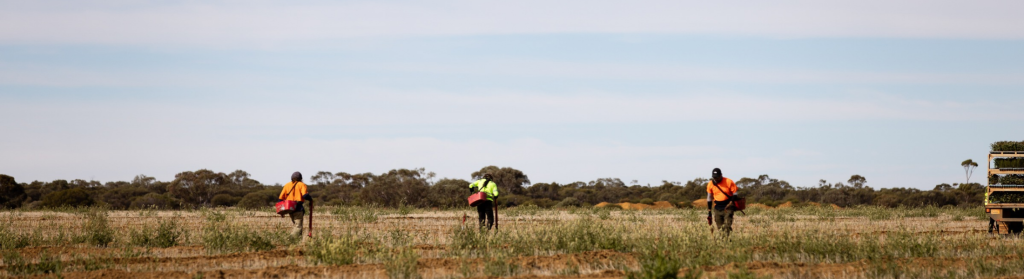
How the voluntary carbon market works in Australia
Australian individuals and organisations can choose from a range of voluntary certifications and standards, as well as non-certified products. ACCUs are one option among many.
Certified products
Australia’s domestic market centres on Australian Carbon Credit Units (ACCUs), issued under the Australian Carbon Credit Unit Scheme and administered by the Clean Energy Regulator. One ACCU equals one tonne of carbon dioxide equivalent.
Businesses can buy ACCUs directly from a project developer, through a broker, or on the secondary market. Once purchased, a business can choose to hold the ACCU or cancel it in the Australian National Registry of Emissions Units, at which point it can no longer be resold or reused.
Sellers are typically project developers: landholders running vegetation or savanna burning projects, waste facility operators capturing landfill gas, or businesses running energy efficiency programmes that qualify under an approved method.
Australian buyers can also buy credits certified under international standards. The best known is Verra’s Verified Carbon Standard, the world’s most widely used greenhouse gas crediting programme, where one credit represents one tonne of carbon dioxide reduced or removed.
The Gold Standard, set up in 2003 by WWF and other international NGOs, also requires projects to contribute to at least two Sustainable Development Goals alongside climate action. The Integrity Council for the Voluntary Carbon Market offers an additional quality label for credits that meet its Core Carbon Principles.
Non-certified products
Some products aren’t registered under a formal certification framework. Carbon Neutral’s Biodiverse Reforestation Carbon Offsets (BRCOs) are one example. As actual carbon will be sequestered in the future, in order to claim carbon abatement using BRCOs to meet international standards, Carbon Neutral retires an equal number of verified carbon credits (‘stapled’ units) from a certified international project. This will satisfy claims of carbon or climate neutrality. In this way the buyer supports Australian biodiverse reforestation and all other co-benefits this project brings.
Why some businesses enter the voluntary market early (The business case for offsetting)
Many businesses buy credits not simply because regulation is coming for them but because they want to do more today. Gold Standard’s view is that companies should take financial responsibility for emissions they cannot yet eliminate each year, rather than wait decades. The urgency is also growing, with the UN Environment Programme now warning the world will cross the 1.5°C threshold in the next few years.

Mandatory schemes are a separate question. The Safeguard Mechanism, Australia’s compliance scheme, applies to facilities emitting more than 100,000 tonnes of Scope 1 emissions a year, which covered 208 of the country’s largest industrial sites in 2024—2025. A 2026–27 review is considering whether to lower that threshold, alongside the inclusion of new sectors, which could bring smaller facilities into scope.
The more grounded reasons to move early sit elsewhere. Businesses that supply large Australian companies may increasingly face requests for emissions data as those customers respond to growing climate-related disclosure requirements and seek to understand their Scope 3 emissions.
Scope 3 covers all other indirect emissions that happen across a company’s entire value chain—both upstream (suppliers and making products) and downstream (customers using and disposing of products). These are sources the company does not own or control.
As ASIC notes, if a business has a customer or supplier that is a large business or financial institution, that customer or supplier may ask them for information to help meet their reporting obligations, for instance where the large business is trying to calculate its value chain greenhouse gas emissions.
Separately, Australia’s mandatory climate-related financial disclosure regime, which started with the largest entities, is extending to medium-sized businesses over the next few years; there is a “cascade effect” on exempt SMEs where large entities require smaller suppliers to provide raw energy and emissions data to satisfy their own reporting compliance.
There’s also a practical argument that has nothing to do with regulation. Getting measurement, governance and purchasing processes right takes time, and a business doing that work under its own timeline is in a considerably better position than one trying to build it under a compliance deadline, should one ever apply.
Why climate action matters beyond certification
With Australia’s Climate Active certification program set to end in 2027, businesses may be reconsidering how they demonstrate their climate commitments.
The value of measuring, reducing and responsibly offsetting emissions extends beyond certification. These efforts can help businesses improve efficiency, respond to stakeholder expectations and demonstrate progress towards their environmental goals.
As the certification landscape changes, high-quality carbon credits can continue to support verified emissions reduction and removal projects, alongside businesses’ own efforts to reduce emissions.
ACCUs vs international carbon credits: what’s the difference?
ACCUs are generated and regulated entirely within Australia, under Australian legislation and Australian government oversight. International voluntary schemes such as Verra’s Verified Carbon Standard, the Gold Standard, Plan Vivo Foundation, Puro.earth, Climate Action Reserve (CAR) and others operate independently, with their own methodologies, registries and verification bodies, and are purchased by many more individuals, organisations and countries globally.
For an Australian business, ACCUs generally offer a more direct link to local projects and local land management outcomes, which can matter for a company wanting to point to a tangible domestic impact. International credits can be cheaper and may cover project types not available or applicable domestically, such as cookstove projects in developing countries, but they come with less oversight from the same regulator a business already deals with for other purposes. Neither is inherently more credible; the two systems answer different priorities.

Voluntary demand for ACCUs is growing
According to this year’s Quarterly Carbon Market Report March quarter, voluntary demand is rising alongside compliance demand, with non-Safeguard cancellations up 8% in the March quarter compared with the same period last year. This small but rising volume signals a market that has grown substantially since its early years, though growth in supply and demand doesn’t by itself tell a buyer anything about the quality of individual credits.
Carbon offsets vs emissions reductions: understanding the difference
Reducing emissions means changing what a business actually does: switching energy sources, improving efficiency, redesigning a supply chain. Offsetting means paying for emissions reductions to happen somewhere else, through a project unconnected to the business’s own operations.
Even a business that’s cut everything it reasonably can will usually be left with some residual emissions, such as certain industrial processes, air travel, or supply chain elements outside its direct control. Carbon credits give a way to account for that remainder while reduction efforts continue elsewhere.
The order of operations matters for credibility. Credible frameworks expect absolute reduction action and near-term targets set, with offsets reserved for the emissions a business genuinely can’t eliminate yet. A business that offsets before making meaningful reduction efforts – or offsets its entire footprint indefinitely without credible reduction efforts – may open itself up to scrutiny regardless of how good the underlying credits are.
Carbon neutral claims and the role of offsets
A carbon neutral claim means a business has measured its emissions, reduced what it can and purchased and cancelled offsets so that net emissions are zero. Within the voluntary market, the benchmark for corporate claims is set by the Voluntary Carbon Markets Integrity Initiative (VCMI), whose Claims Code of Practice is a demanding standard: companies must first show progress on their own emissions targets, then use high-quality credits that meet the Integrity Council’s Core Carbon Principles.
The legal test, however, is set by the ACCC. In Australia, the Australian Competition and Consumer Commission (ACCC) has increasingly scrutinised carbon neutral claims; it treats a false or misleading environmental claim, including one that omits key information, as greenwashing under the Australian Consumer Law, and continues to make environmental and sustainability claims a compliance priority. Its guidance for businesses recommends accounting for emissions using reputable methodologies and communicating clearly and transparently about the actions underpinning a claim, including the use of purchased offsets.
Common misconceptions about the voluntary carbon market
A few misunderstandings come up often. One is that any carbon credit is as good as any other; in practice, project type, methodology and vintage all affect quality substantially.
Another is that buying a credit is the same as using it credibly. The purchase is a one-off transaction; credible use is about where the credit sits in a company’s climate strategy. The Science Based Targets initiative (SBTi) does not treat credits as a substitute for cutting emissions within a company’s own value chain. Instead, they can be used to take responsibility for emissions that have not yet been abated, or to neutralise residual emissions at net zero.
A third is that offsetting alone, without any reduction effort, is a legitimate long-term climate strategy; regulators and most stakeholders increasingly don’t accept that framing.
How to choose high-quality voluntary carbon credits
For ACCUs, the method, vintage, co-benefits and the Clean Energy Regulator’s public register all matter, and our guide to choosing Australian carbon credits in 2026 covers each in detail.
For any voluntary credit, whether an ACCU, an international credit or a non-certified product, a few checks apply:
Standard – is the credit issued under a recognised standard or scheme, and does it carry an integrity label such as Verra’s Verified Carbon Standard or Gold Standard?
Verification – has an independent third party verified the abatement, and can the seller show you the audit history?
Project – can the seller identify the specific project, method and location behind your credits?
Registry – is each credit tracked on a registry, so it can only be cancelled once and never resold?
Evidence – will you receive proof of cancellation and project details to support any claims you make?
What businesses should consider before buying carbon credits
Before purchasing, a business should have a reasonably clear answer to a few questions:
What emissions, if any, are the credits addressing? A business can buy and retire a set number of tonnes to support a carbon project without tying the purchase to an emissions figure. A figure only becomes necessary when the business makes a claim such as carbon neutral, at which point the credits need to match the emissions the claim covers.
Have absolute emissions reductions been prioritised? Credible use of credits starts with cutting the total tonnes a business emits, with credits addressing what remains rather than standing in for those reductions.
What claims will be made about the purchase? Deciding this before buying helps a business choose credits that support what it wants to say, whether that is backing a carbon project or making a claim such as carbon neutral, and keep its wording accurate.
Are the claims clear and transparent, and has someone within the business reviewed them? Carbon credits can make a positive difference to the climate today, and clear, transparent claims about what was purchased and what it covers help businesses use them with confidence.
Price matters too; ACCU and international carbon credit prices have fluctuated across recent years, so getting a current quote rather than budgeting off older figures is worth doing before committing.

The future of Australia’s voluntary carbon market
Demand for ACCUs looks set to keep growing, driven by both Safeguard Mechanism obligations and voluntary corporate commitments. As the market evolves, regulatory attention on carbon credit integrity and scrutiny of environmental claims from the ACCC are also expected to continue.
While the closure of Climate Active in 2027 marks a shift in Australia’s certification landscape, the fundamentals of credible climate action remain unchanged.
Businesses can continue measuring their emissions, setting meaningful reduction targets and prioritising direct emissions reductions, while using high-quality carbon credits to support emissions reduction and removal projects.
For businesses, the end of certification doesn’t have to mean the end of their climate commitments. Continuing to measure, reduce and responsibly offset emissions can help demonstrate progress, meet stakeholder expectations and support meaningful climate action beyond certification.
Contact us today
To discuss your specific needs and develop a tailored strategy to navigate the evolving regulatory landscape with confidence.
Explore stories in the world of sustainability, carbon and climate change.
 How to Choose Australian Carbon Credits in 2026
If your organisation needs to compensate for unavoidable emissions, choosing an Australian Carbon Credit Unit (ACCU) is an important decision. While all ACCUs are issued under the Australian Government’s ACCU…
 Carbon Neutral Contributes to New Paper on Vietnam’s Forest Carbon Pricing Framework
Vietnam took a significant step this year toward a functioning forest carbon market. In May 2026, the government issued Decree No. 180/2026/NĐ-CP on forest-based carbon sequestration and storage services, followed…
 7 Integrity Considerations When Sourcing Carbon Credits
Not that long ago, buying a carbon credit seemed fairly straightforward, as were the claims you could make once purchasing that credit. But increasing public and journalistic scrutiny around carbon credits…
 Falbala Returns to Eastern Maar: A Milestone in Land Justice and Carbon Farming
Carbon Neutral is proud to be working with Eastern Maar Aboriginal Corporation (EMAC) on a landmark project at Falbala, a 252-hectare property at Beech Forest in the Otways. On 3…
 The market’s rediscovery of plantation forestry ACCUs
For most of its early development, plantation forestry ACCUs occupied a niche position in the Australian carbon market. Long crediting timeframes, FullCAM-based accounting and permanence obligations stretching to 100 years made them slower…
 From football to footprint: the carbon cost of the 2026 World Cup
Businesses have had to answer for their emissions and take real steps to offset them since 2013, when the UK became the first country in the world to make carbon reporting mandatory for its largest…
 Unpacking Australia’s Biodiversity Claims vs Reality
Australia recently submitted its Seventh National Report to the Convention on Biological Diversity, its first under the Kunming-Montreal Global Biodiversity Framework (GBF). At first glance the report suggests that we’re a nation “on…
 Carbon Neutral launches Australia’s largest environmental planting carbon project.
Great Woodlands Renewal project to restore 28,000 hectares and establish 16 million trees adjoining one of the world’s largest remaining temperate woodland ecosystems. Carbon Neutral has unveiled plans for what…