
Carbon Neutral Contributes to New Paper on Vietnam’s Forest Carbon Pricing Framework
Renee McMahon
DateSeptember 2026
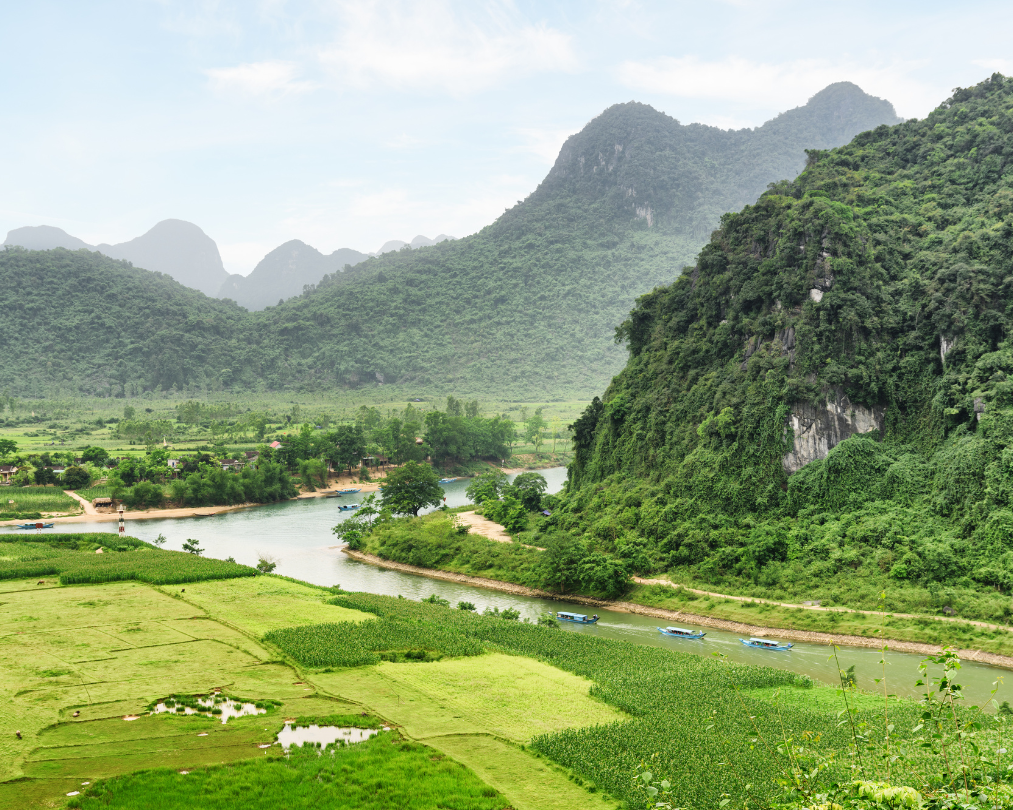
Vietnam took a significant step this year toward a functioning forest carbon market. In May 2026, the government issued Decree No. 180/2026/NĐ-CP on forest-based carbon sequestration and storage services, followed in July by Circular No. 31/2026/TT-BNNMT, which establishes methods for valuing forests and determining payment levels for forest carbon, particularly from state-owned forests.
Together, the two instruments start to resolve questions that have held the market back for years: who owns emission-reduction credits, how projects get registered, and how forest carbon should be priced.
Carbon Neutral International Partnerships Manager Rebecca Pearse has contributed to a new discussion paper examining what these rules will mean in practice. Co-authored by Pham Thu Thuy, Tran Hong Nhung and John Kandulu from Flinders University, Forest Carbon Pricing in Vietnam: From Policy to Practice is an early assessment of Circular 31 since it came into effect.
The paper draws on consultations with 12 experts and practitioners across international and domestic businesses, banking and finance, development organisations, research institutes and government agencies, gathered between June and July 2026. In the absence of much transaction data to draw on yet, these perspectives offer an early read on how the Circular is likely to play out for the people who actually have to work with it.
Rebecca’s contributions, on behalf of Carbon Neutral, centred on the project developer and investor perspective, looking closely at the distinction between what a forest carbon project costs to run and what its credits are actually worth on the market, and drawing on relevant lessons from Australia’s ACCU Scheme about market pricing, government intervention and price transparency to inform that analysis. They also examined how opportunity costs and buffers should be treated in pricing, what evidence is needed to support a credible market price and the governance required to keep pricing of public forest carbon transparent and defensible.
The findings point to real opportunities in Vietnam’s forest carbon market, alongside some open questions for government, forest owners, project developers, investors, financial institutions and carbon buyers to work through as implementation continues. As the authors note, there’s more empirical work to be done; this paper is an early, evidence-based contribution to a conversation that will keep developing as Circular 31 meets the real world.
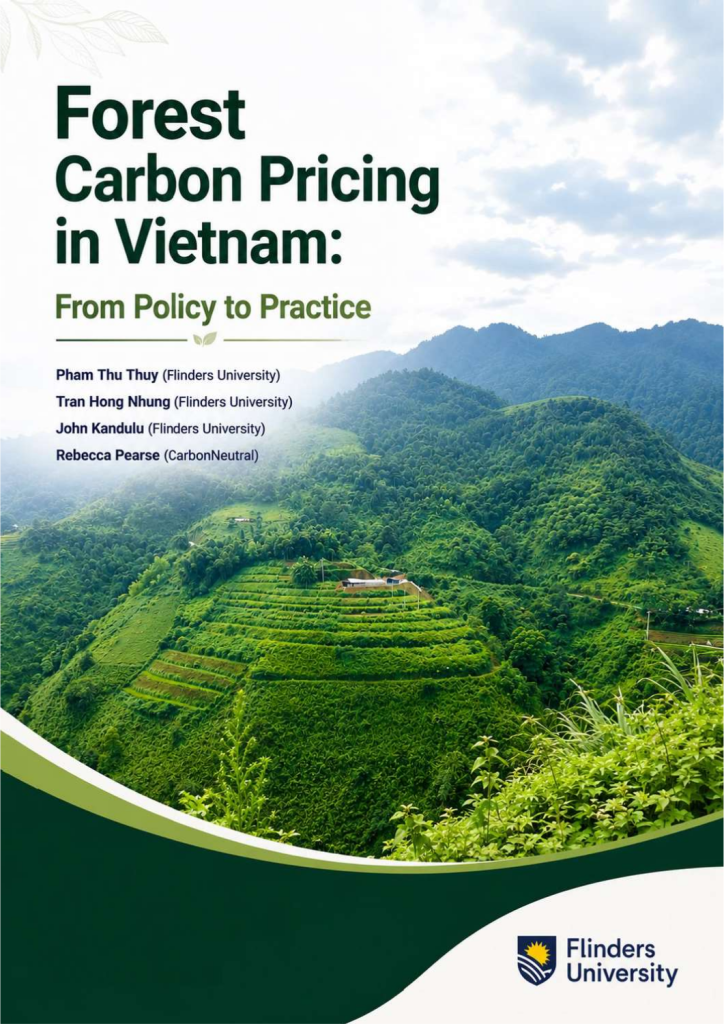
Read the full discussion paper, published through Flinders University, below.
Explore stories in the world of sustainability, carbon and climate change.
 How to Choose Australian Carbon Credits in 2026
If your organisation needs to compensate for unavoidable emissions, choosing an Australian Carbon Credit Unit (ACCU) is an important decision. While all ACCUs are issued under the Australian Government’s ACCU…
 7 Integrity Considerations When Sourcing Carbon Credits
Not that long ago, buying a carbon credit seemed fairly straightforward, as were the claims you could make once purchasing that credit. But increasing public and journalistic scrutiny around carbon credits…
 Falbala Returns to Eastern Maar: A Milestone in Land Justice and Carbon Farming
Carbon Neutral is proud to be working with Eastern Maar Aboriginal Corporation (EMAC) on a landmark project at Falbala, a 252-hectare property at Beech Forest in the Otways. On 3…
 The market’s rediscovery of plantation forestry ACCUs
For most of its early development, plantation forestry ACCUs occupied a niche position in the Australian carbon market. Long crediting timeframes, FullCAM-based accounting and permanence obligations stretching to 100 years made them slower…
 From football to footprint: the carbon cost of the 2026 World Cup
Businesses have had to answer for their emissions and take real steps to offset them since 2013, when the UK became the first country in the world to make carbon reporting mandatory for its largest…
 Unpacking Australia’s Biodiversity Claims vs Reality
Australia recently submitted its Seventh National Report to the Convention on Biological Diversity, its first under the Kunming-Montreal Global Biodiversity Framework (GBF). At first glance the report suggests that we’re a nation “on…
 Carbon Neutral launches Australia’s largest environmental planting carbon project.
Great Woodlands Renewal project to restore 28,000 hectares and establish 16 million trees adjoining one of the world’s largest remaining temperate woodland ecosystems. Carbon Neutral has unveiled plans for what…
 Carbon Neutral Announces New Chief Commercial Officer
Carbon Neutral is thrilled to announce the appointment of Su-Mei Sain as the organisation’s Chief Commercial Officer. Since joining the company last year as Head of Investment Opportunities, Su-Mei has played a key role in progressing the organisation’s commercial…