
From football to footprint: the carbon cost of the 2026 World Cup
Carbon Neutral
DateJuly 2026
Businesses have had to answer for their emissions and take real steps to offset them since 2013, when the UK became the first country in the world to make carbon reporting mandatory for its largest listed companies. If your business emits it, you measure it, you report it and increasingly, you’re expected to do something about it.
Curiously, major sporting events aren’t treated with the same level of rigour. A World Cup can spend six weeks moving tens of millions of people across three countries and come out the other side with nothing more binding than a “sustainability strategy”.
And it just did. Let’s interrogate that a bit more closely.
The scale of this year’s World Cup
Global emissions have gone up almost every year this century, with 2020 the sharpest exception (for obvious reasons). Football has followed the same trajectory and this year’s World Cup didn’t buck the trend; it set a new one.
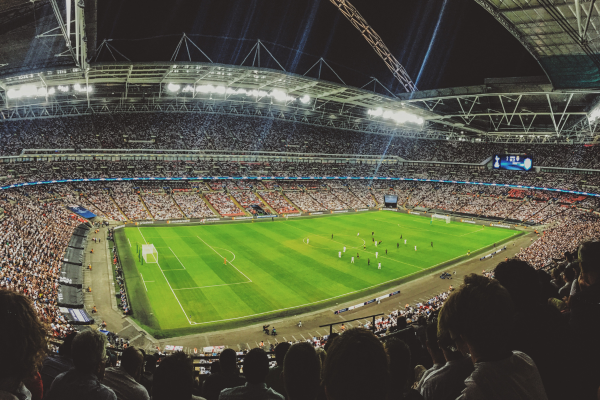
The 2026 tournament was bigger and more widespread than anything before it: 48 teams and 104 matches representing a 63 percent jump in games from Qatar 2022, according to Greenly analysis. It ran 39 days, up from 29 in Qatar, across 16 host cities in the US, Canada and Mexico instead of five in one country, with sponsors, journalists, broadcasters and officials all criss-crossing the continent to keep up.
Congratulations to Spain and to everyone who got to experience the World Cup in-person. But with victory comes a cost.
So, what did the 2026 World Cup cost in carbon?
Greenly’s June estimate was 7.8 million tonnes of CO2e, 2.1 times Qatar 2022’s total (though FIFA didn’t publish those figures until two years after the final whistle, before which the Swiss Fairness Commission had already ruled its carbon-neutral marketing claims unsubstantiated.)
Unsubstantiated or not, Qatar’s number included seven brand new stadiums built from scratch in the desert; this year’s infrastructure costs were a mere 3 percent of the total, since every 2026 venue already existed. So if it wasn’t the stadiums, where did the rest come from?
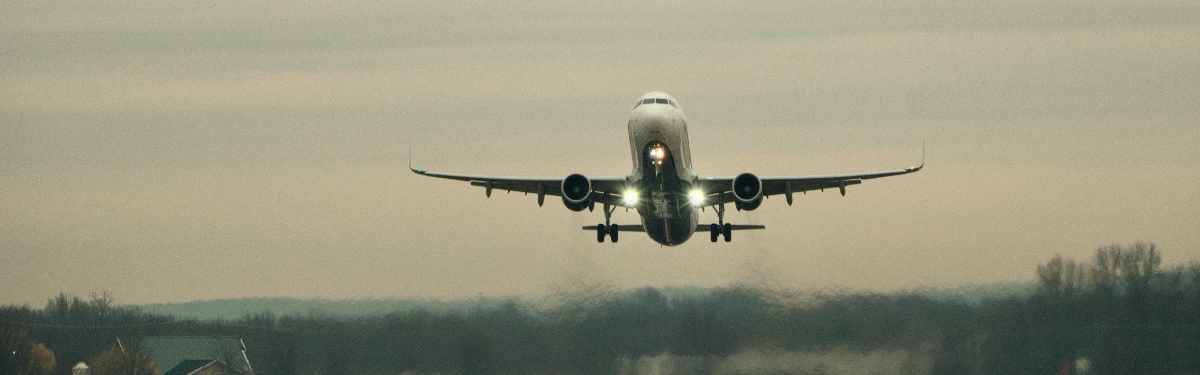
The answer: spectator travel, and almost all of it. Nearly 88 percent of the tournament’s footprint came from fans getting to and from matches, against a rounding error of 0.2 percent for the teams themselves.
Part of that is simply more people; attendance jumped from 3.4 million to 6.8 million, according to The World Data. Part of it is more places: two extra host countries and eleven extra host cities. And part of it is geography working against everyone involved.
Qatar sits at the centre of the football world, within easy reach of Europe, South Asia and Africa all at once. North America doesn’t have that luxury. Greenly’s analysis stated that the average international spectator faced a return journey of roughly 19,400 kilometres, against 13,000 kilometres for Qatar 2022.
It isn’t all bad news: the host grids run about 25 percent cleaner than Qatar’s and US hotels generate roughly a sixth of the emissions per guest per night that Qatar’s did. Unfortunately, none of that is enough to offset six million attendances spread across sixteen cities in three countries.
The other figures circulating
7.8 million wasn’t the only number thrown around. Writing in the Guardian in May, Jules Boykoff cited a separate scientific projection: around 9 million tonnes of CO2e and a worst-case upper estimate closer to 13.7 million. Greenly’s own report cited the same figure, attributed to a joint estimate from Scientists for Global Responsibility and the Environmental Defense Fund, sitting above its own modelling; two outlets, reporting independently, pointing back to the same underlying study.
So, take your pick: FIFA’s bid-stage 3.7 million, built for an 80-match tournament; Greenly’s bottom-up 7.8 million, built from the actual 104-match format; or the 9 million that both the Guardian and Greenly trace to the same source. However you slice it, every independent recalculation lands well above what FIFA put in front of voters in 2018.

The impact of climate change on the game itself
The increased projected carbon emissions of this year’s tournament is compounded by the fact that temperatures in North America have risen on average by 0.7°C since they last hosted the World Cup in 1994.
For reference, the global union for professional football players (FIFPRO) considers games played in 28°C heat to be unsafe. Reuters analysis states that more than one in four games experienced dangerous heat conditions. Given that, prior to commencement, the US experienced its hottest 12-month period on record, this is not particularly surprising. Add in the fact that several stadiums hosting the 2026 World Cup did not have air conditioning and it’s a recipe that needs adjusting.
In response to fears of extreme heat risk for players, FIFA introduced mandatory 3-minute hydration breaks, a measure that experts deemed too short to meaningfully impact rehydration and body cooling. Stadiums even allowed fans to bring soft plastic water bottles into stadiums, the risk to health outweighing the pollution associated with such bottle materials.

Was it worth it? What the World Cup made
FIFA initially budgeted around 11 billion US dollars in revenue for its 2023 to 2026 cycle, with this tournament as the centrepiece. That target has since been revised upward twice, with CNBC confirming tournament revenue of just over US$9 billion for 2026.
The real figure won’t be confirmed until FIFA publishes its audited annual report for the 2023 to 2026 cycle. Historically, FIFA’s own in-the-moment estimates have landed below what independent analysts calculate after the fact.
A tournament that can nail its own revenue projections to the billion but can’t manage the same discipline with its emissions numbers isn’t an accounting problem; it’s a question of what FIFA actually chooses to measure carefully.
Who needs to pay?
World Cup fans stayed behind after matches to clean up the rubbish left in the stands, a small gesture that proved their love of the game. And good on them. But an individual with a rubbish bag shouldn’t be the only one who cares about the mess left behind by an event of this size.
FIFA does have a Sustainability and Human Rights Strategy for this tournament, built around four pillars, one of which covers energy efficiency, waste and host-city transport planning. What it doesn’t contain, according to Greenly’s analysis, is a carbon budget, an updated emissions estimate, or any public commitment on how the final footprint will be reported. Notably, it says nothing about spectator travel, the category responsible for 88 percent of the problem. FIFA’s wider pledges, a 50 percent emissions cut by 2030 and net zero by 2040, apply to FIFA as an organisation, not to this tournament.
Writing in Al Jazeera, Azzam Abu-Rayash proposed an alternative: a Sports Climate Responsibility Fund, financed by FIFA along with sponsors and broadcasters, with independent oversight. UEFA already ran something similar for Euro 2024, channelling close to 8 million euros into grassroots sustainability projects (though on a scale built for one country rather than three).
It comes down to this: a World Cup with FIFA’s revenue and footprint owes fans, host cities and the planet more than a strategy document.
Contact us today
To discuss your specific needs and develop a tailored strategy to navigate the evolving regulatory landscape with confidence.
Explore stories in the world of sustainability, carbon and climate change.
 How to Choose Australian Carbon Credits in 2026
If your organisation needs to compensate for unavoidable emissions, choosing an Australian Carbon Credit Unit (ACCU) is an important decision. While all ACCUs are issued under the Australian Government’s ACCU…
 Carbon Neutral Contributes to New Paper on Vietnam’s Forest Carbon Pricing Framework
Vietnam took a significant step this year toward a functioning forest carbon market. In May 2026, the government issued Decree No. 180/2026/NĐ-CP on forest-based carbon sequestration and storage services, followed…
 7 Integrity Considerations When Sourcing Carbon Credits
Not that long ago, buying a carbon credit seemed fairly straightforward, as were the claims you could make once purchasing that credit. But increasing public and journalistic scrutiny around carbon credits…
 Falbala Returns to Eastern Maar: A Milestone in Land Justice and Carbon Farming
Carbon Neutral is proud to be working with Eastern Maar Aboriginal Corporation (EMAC) on a landmark project at Falbala, a 252-hectare property at Beech Forest in the Otways. On 3…
 The market’s rediscovery of plantation forestry ACCUs
For most of its early development, plantation forestry ACCUs occupied a niche position in the Australian carbon market. Long crediting timeframes, FullCAM-based accounting and permanence obligations stretching to 100 years made them slower…
 Unpacking Australia’s Biodiversity Claims vs Reality
Australia recently submitted its Seventh National Report to the Convention on Biological Diversity, its first under the Kunming-Montreal Global Biodiversity Framework (GBF). At first glance the report suggests that we’re a nation “on…
 Carbon Neutral launches Australia’s largest environmental planting carbon project.
Great Woodlands Renewal project to restore 28,000 hectares and establish 16 million trees adjoining one of the world’s largest remaining temperate woodland ecosystems. Carbon Neutral has unveiled plans for what…
 Carbon Neutral Announces New Chief Commercial Officer
Carbon Neutral is thrilled to announce the appointment of Su-Mei Sain as the organisation’s Chief Commercial Officer. Since joining the company last year as Head of Investment Opportunities, Su-Mei has played a key role in progressing the organisation’s commercial…